Showing posts with label Metabolic Tips. Show all posts

Thursday, December 16, 2010

CSIR UGC NET Paper II some previous - Part 2

Hope it will be beneficial.

1.  a. What is the pH of Distilled water? Can give the reasons? 3M
b. What essential is the difference between distilled and deionized water? 3M

2. Can you draw competitive and non-competitive inhibition Line-weaver-Burke Plots. Explain these different trends with respect to the mode of inhibition. 6M

3. a. Explain the condition under which two species can co-exist in a single niche? Don’t they reject competitive exclusion principle. 3M
b. Explain relationship between Biomass and productivity. 3M
c. Explain adaptive radiation with example of Darwinian finches.3M

4. a. At pH 7, polylysine, which is a polypeptide in which all the residues are lysine, adopts a random coil conformation with no regular secondary structure, However, at pH 12 it is present as an α-helix. Explain. 3M

Residue Number

Phi (deg)

Psi (deg)

1

-60

147

2

-49

-32

3

-67

-34

4

-58

-49

5

-66

-32

6

-82

-36

7

-69

-44

8

-61

-44

9

-72

-29

10

-66

-65

11

-67

-23

image

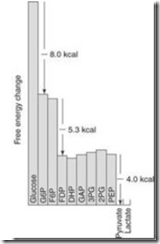
5. The free energy diagram of Glycolysis shown in Figure. What do you confer or propose from this. 6M

6. What is the difference between climacteric and non-climacteric fruit? Give three examples? 6M

7. What is "photorespiration" and why it is needed by plants? 3M

8. How is the depletion of ozone affecting the plankton levels in the oceans? 3M

9. Why virulence lost on sub-culturing? 6M

10. What are abzymes and ribozymes. Explain the differences and similarities? 6M?

Thanks for HelpBiotech

Saturday, November 13, 2010

Metabolic Tips saves ur time when ur studying Intermediary Metabolism

Metabolic Tips saves your time when your studying Intermediary Metabolism 
 
1. Three compulsory lists that must be at your tips-
  • Ketogenic and Glucogenic amino acids.
  • Essential and Nonessential amino acids.
  • Basic, Acidic, Sulphur containing amino acids.
2. Regulatory Enzymes of pathways e.g.
  • Citrate synthesis in citric acid cycle.
  • Phosphofructokinase in Glycolysis.
  • Pyruvate dehydrogenase in Pyruvate Oxidation.
  • Pyruvate Carboxykinase in Gluconeogenesis.
  • Glycogen Synthase in Glycogenesis.
  • Phosphorylase in Glycogenolysis.
  • G6PD in PPP.  
  • HMG CoA reductase in cholesterol synthesis.
3. Search for ATP estimates e.g.,
  • 8 ATP’s per Glucose molecule in Glycolysis under aerobic conditions.
  • 30 ATP’s per Pyruvate molecule entering citric acid cycle.
  • 129 ATP’s per palmitate undergoing b-oxidation.
4. Look for regulatory molecules and feedback inhibitions e.g.,
  • Glucose-6-phosphate inhibition on hexokinase.
  • Citrate’s inhibitory effect on phosphofructokinase 1.
  • Alanine’s inhibitory effect on Pyruvate kinase.
  • Acetyl CoA’s inhibitory effect on Pyruvate dehydrogenase.
  • Long chain acyl CoA’s inhibitory effect on Acetyl CoA carboxylase.
5. Look for subcellular organelles where the reactions specifically occur.
  • Enzymes of citric acid cycle in mitochondrial matrix.
  • Enzymes of Glycolysis in cytosol.
  • Enzymes of pentose phosphate pathway in cytosol.
  • Enzymes of denovo synthesis of fatty acids in cytosol.
  • Enzymes of fatty acid oxidation in mitochondria.

6. Always have a clarity regarding precise role of various lipoproteins.
  • HDL is cholesterol scavenger.
  • Chylomicrons carry dietary cholesterol.
  • VLDL are vehicles of transport of triacylglycerol from the liver to extrahepatic tissues.
7. Vitamins and their role as coenzymes e.g.,
  • Thiamine in oxidative decarboxylation.
  • Niacin in dehydrogenase reactions.
  • Pantothenic acid in CoA.
  • Pyridoxal phosphate in muscle phosphorylase.
  • Biotin in carboxylase enzymes.
  • Vitamin B12 to produce succinyl CoA.
  • Folate in transfer of one-carbon units.

8. Products that accumulate in metabolic disorders e.g.,
  • Homogenisate in urine of Alkaptonuria patients
  • Phenyl acetyl glutamine in phenylketonuria.
  • Xanthurenate in Vitamin B6 deficiency.
  • Branched chain ketonuria in Mapple syrup urine disease.
9. Check for key enzymes responsible for Metabolic disorders e.g.,
  • Glucose-6-phosphates in von Gierkes.
  • Hepatic fructokinase in essential fructosuria.
  • Galactose-1-phosphate uridyl transferase in Galactosemia.
  • Cystathionine-b-synthase in homocystinuria.
10. Where NADH forms, where NADPH forms, where FADH2 forms, where substrate level phosphorylation occurs e.g.,
  • FADH2 in succinate dehydrogenase in citric acid cycle.
  • NADH in all degradation reactions.
  • NADPH in all synthetic reactions.
Related Posts Plugin for WordPress, Blogger...